The Ever-Changing Skies of Connemara and the Unchanging Stillness Within
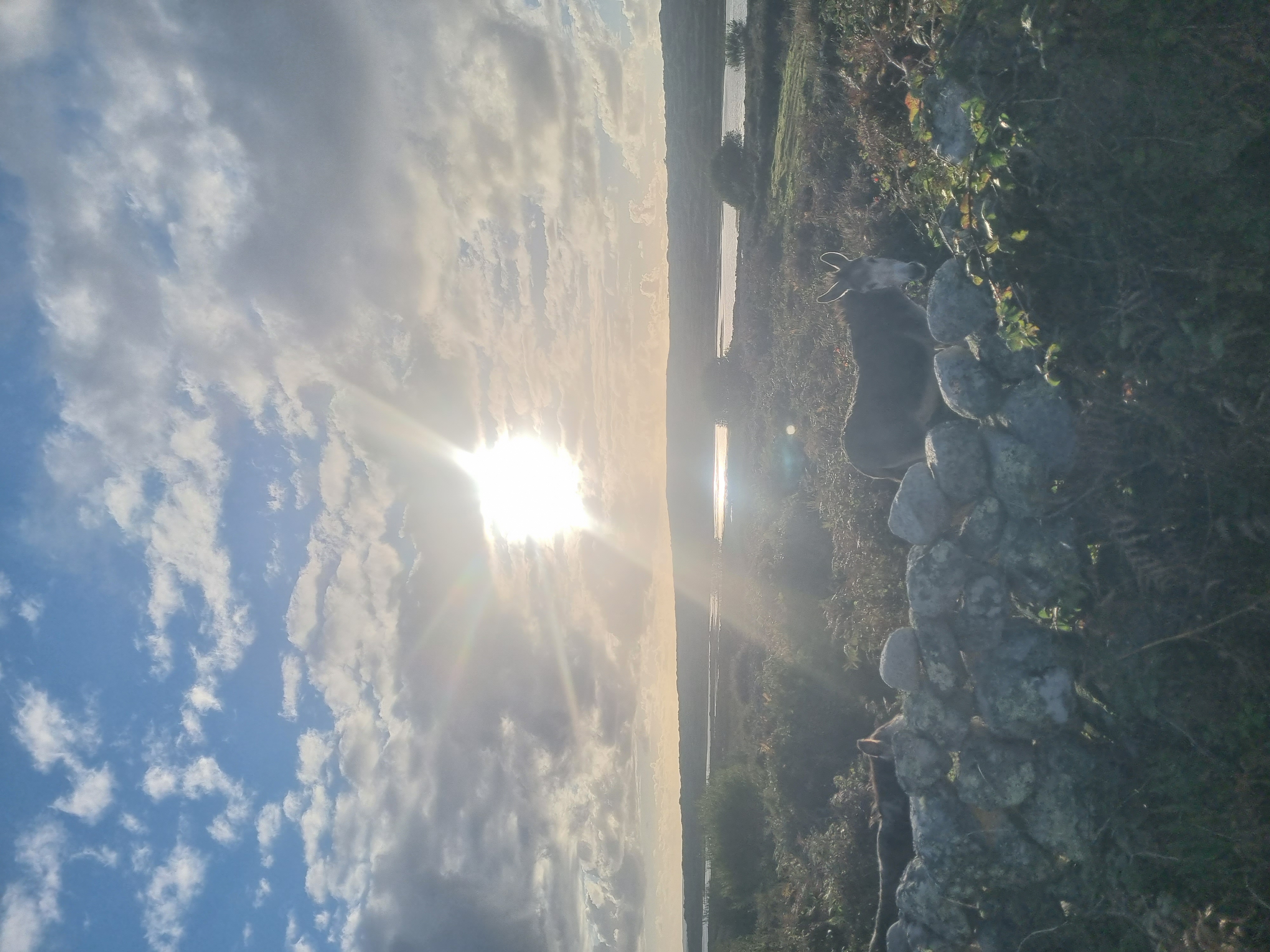
I'm writing this from Connemara on the west coast of Ireland. Yesterday the wind was howling, the rain was hammering down. It was dark, grey and wet.
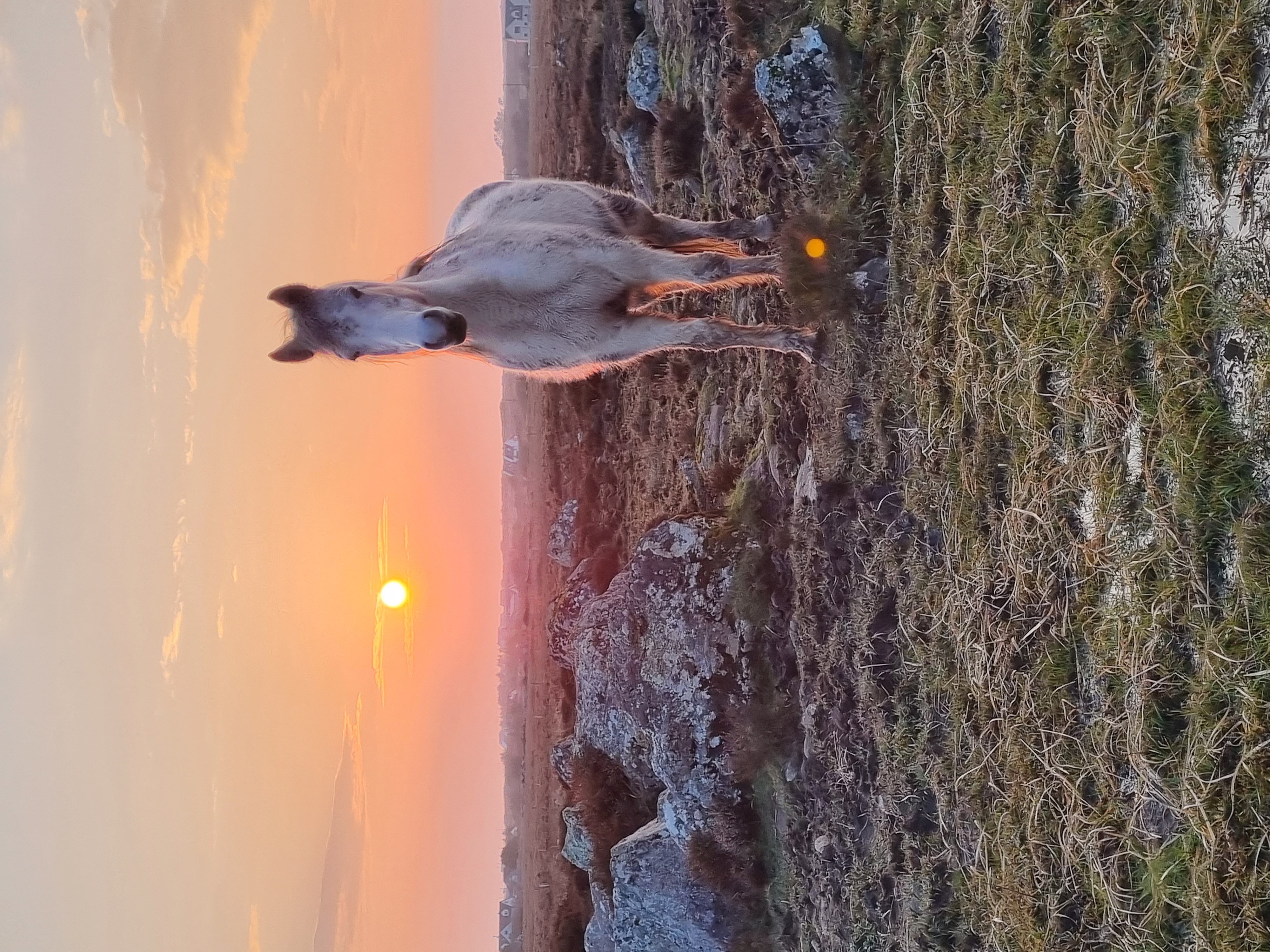
Now, the sunlight is piercing through the clouds, the dark weather is shifting. The blue sky that was always there is slowly being revealed again.
Some of my favourite quotes speak to this...
'I wish I could show you, when you are lonely or in darkness, the astonishing light of your own being.' - Hafiz
'The blue sky is always there for us. When it rains and storms, clouds cover the sky, but we are confident the blue sky is still there.' - Thích Nhất Hạnh
And Leonard Cohen’s beautiful lyric: 'There is a crack in everything. That’s how the light gets in.'
Different voices and traditions, all pointing us somewhere similar. We can all understandably become identified with the weather of our day to day lives that we forget the vast sky that pervades everything.
A difficult week comes and we feel completely consumed by it. Anxiety moves through the body and mind and suddenly we are anxiety. Nothing else seems to exist but that horrible feeling.
Emotional upset swells up inside us and the whole landscape feels dark. We can become overwhelmed, scared, and feel disconnected from ourselves, and from life. The ache of it all is the call home.
All natural. All part of being human. All okay. None of these feelings should be denied or bypassed, ever. The storms of life are real. Sometimes they are enormous.
Our body sensations and feelings provide vital soul data. They are highly sophisticated instruments of love letting us know what’s happening. The Self communing and communicating. Pure intelligence.
These mental and emotional storms moving through us are also a layer. Like a storm moving through the sky. Like a current moving through the ocean of our Being.
When we are identified only with that layer and cannot also detect the vastness of our deepest nature, we can forget the wholeness of all that we are.
This is something daily meditation allows us to experience directly rather than believing as a concept. I'm not interested in believing anything. I'm interested only in direct knowing. As we move beyond the surface layers of thinking, in some meditations we begin to touch quieter, deeper parts of ourselves. Effortlessly. As the wise teaching says, ‘be still and know...’.
We experience immanence as we travel inwards ever more deeply into the essence of Being. Underneath all the movement, we can experience a profound stillness, inner knowingness. We can penetrate deep into love which can the pour through our hearts, from the inside out... and we can simultaneously detect many other layers. All together as one whole experience.
I love the image of the wild skies because the sky does not fight the weather. It has room for all of it. Its design is all of it. Thunder, rain, lightning, rainbows, storms, wind, sunshine, clouds, and then rain again. Nothing needs to be pushed away. It’s all aliveness. It all adds richness, texture, depth, contrast and beauty.
The meditation practice I teach is similar. We don’t meditate to pretend the clouds aren’t there or try to make them go away. We are not chasing bliss, or peace or calm in meditation. It’s relieving not to chase anything. It’s a relief to let ourselves be as we are. Everything is welcome in our practice.
The invitation is to surrender to what is, to let go into the essence of who and what we are.
And in the letting go and surrender lives an intimate presence with the real aliveness of what is, and this is where we meet ourselves. It’s an unveiling. Revelation.
All of us is welcome in our practice... nothing is denied, but all is lovingly, tenderly, powerfully welcomed in.
The invitation is all inclusive awareness. The clouds and the sky, together.
Intimate presence with what is real. With truth.
If you are moving through what feels like heavy weather at the moment, please go gently with yourself. If you can, please hold compassion for yourself. Nourish yourself through it with the care you deserve, with the same love you would offer a friend.
Be kind to others. We have no idea of what people on the streets we meet are going through. What they've been through. Times are hard for many.
Reach out for help if and when you can from trusted solid professional sources. Talk to someone you trust deeply, someone with integrity. Talking can truly help. We’re not meant to carry it all alone.
The clouds may feel dark and heavy now, but they are not all that we are. The dark weather always passes. The absolute vastness of Being is always there. Never not. Like the vast sky woven through the clouds.
When you can compassionately be with what is moving through you, feel your feelings fully, and also witness the heavy weather as it moves through your system, consider for a moment, what in you has the capability to witness?
There is something bigger than the storm itself if a part of you can also observe it, with compassion.
Awareness. The vast sky of awareness can observe its contents, the storms, wind and rain. Meditation cultivates greater awareness, and can help us so much.
This is one of the great gifts of daily practice. We can slowly become less afraid of our own internal weather. We experience that we can feel the storm intensely without becoming consumed by it, allowing it to move through us with tenderness, a profound love, witnessing it in the live moment, while remembering the vastness that pervades it all. Feeling it all.
There are many beautiful practices, modalities and ways of being available to us as humans. Each of us is uniquely drawn to what resonates with us, and there is something wonderful in that diversity.
I work with people who truly desire to meditate. Not a should. Not a nudge by another. Not another wellbeing green tick. But a deep soul pull.
And if the pull is there for you, I’m here. Teaching people how to meditate, how to go within.
What I’ve noticed in my own life and the people I’ve been honoured to teach is that twice daily meditation also helps us access an immense internal power that already lives deep within us. Why power?
Because meditation is a practice of no longer abandoning ourselves. Power is cracked into and unleashed when we sit with discomfort, rather than reaching for our usual soothing mechanisms, of which we all have. To be with what is, and let it move through us is powerful. It is an act of profound love.
The bright blue sky of our deepest nature was never gone. It was only, for a time, hidden behind the clouds.
As we dive into the essence of our deepest nature, doing this consistently also awakens an embodied sense of our interconnectedness which each other, the earth, and all life. It awakens creativity, joy, a want to serve life. Belonging.
Simply put, we become more ourselves.
Being ourself feels good. Acting in the world and expressing ourselves in whatever way we feel called to from this place of depth, breadth, and authenticity, from our hearts, feels good.
Meditation is a practice of liberation. It can also make us uncontrollable.
And with everything happening on earth right now, we need practices of stillness, of going within, of inner connection, so that when we open our eyes and act, we are in our full holy creative power.
I teach Vedic Meditation over four sessions held over four consecutive days. We go deep. It’s gorgeous.
Vedic Meditation is always taught in person, face to face only. I’ve been trained traditionally in the Himalayas and I am so grateful for all teachers who came before me.
I also teach a Being Technique, another similar form of meditation taught live online via Zoom, over three two-hour sessions. This is for those who cannot learn Vedic Meditation in person with me.
I teach Vedic Meditation courses in Dublin and Clare, and also offer private one-to-one training’s all throughout Ireland and internationally where I travel to those who want me to come to them to teach them where they are. I travel to people’s homes and places of work, it’s wonderful.
Once you’ve completed the training, you’re warmly invited to join my weekly online community meditations every Sunday morning at 9am, for our whole community. This is something I’ve been running for many years. Community is a vital part of my work.
I love my work so much. There is nothing I’d rather be doing that supporting people to go within.
If you’re drawn to learning how to meditate, I’m here, always teaching.
Upcoming Vedic Meditation course dates, and online course dates, are listed on my website.
Thank you for reading these words, wishing you so well.
Le grá,
Susan